
Many construction companies invest in marketing without a clear plan. They launch advertising campaigns, redesign websites, or post on social media, but the results often remain inconsistent. Without a defined strategy, marketing becomes reactive rather than intentional.
A construction marketing plan provides structure. It connects marketing activities to real business goals such as revenue targets, preferred project types, and geographic expansion. Instead of experimenting with random tactics, companies can focus resources on the initiatives most likely to generate qualified opportunities.
Strategic marketing plans are especially important in the construction industry because projects involve large budgets and long sales cycles. Prospects often spend weeks researching contractors before initiating contact. A structured marketing plan ensures your company appears in the places potential clients look for information.
If you are new to the topic, begin with the complete guide to construction marketing, which explains how strategy, websites, SEO, and advertising work together to create predictable lead generation.

Why Construction Companies Need a Marketing Plan
Most construction companies rely heavily on referrals and relationships to generate work. While this can sustain a business, it rarely supports predictable growth.
A marketing plan creates consistency. It gives companies control over their pipeline, allowing them to attract the types of projects they want rather than taking whatever comes in.
This shift—from reactive to intentional growth—is what separates companies that plateau from those that scale.
What Is a Construction Marketing Plan?

A construction marketing plan is a structured roadmap that defines how a construction company attracts prospects, generates leads, and converts them into projects.
It typically includes:
- Business goals and revenue targets
- Ideal client profile (ICP)
- Market and keyword research
- Website strategy
- SEO and content plan
- Paid advertising strategy
- Lead tracking systems
- Performance metrics
Instead of approaching marketing as a collection of disconnected tactics, the plan organizes efforts into a coordinated system where each component supports the others.
An effective plan varies depending on whether you serve a B2B or B2C audience:
- B2C (residential contractors): Focus on SEO, paid advertising, and lead conversion
- B2B (commercial contractors): Focus on relationships, brand positioning, PR, social media and visibility
Companies that implement a structured marketing strategy gain better control over their pipeline and can pursue projects more strategically.
Step 1: Define Clear Business Goals
The first step in any construction marketing plan is defining business objectives. Marketing should always support broader company goals rather than operating independently.
These goals may include:
- Increasing annual revenue
- Expanding into new service lines
- Targeting higher-value projects
- Entering new geographic markets
Example Revenue Breakdown
- Revenue goal: $3,000,000
- Average project value: $150,000
- Projects needed: 20
From there, you can estimate how many leads are required based on your close rate.
Understanding these numbers ensures marketing performance is measured in terms of actual business outcomes—not vanity metrics.
Step 2: Identify Your Ideal Client Profile

Construction companies often struggle with marketing because they attempt to target everyone. In reality, the most successful contractors focus on a specific type of client and project: their target market or ideal customer profile.
An ideal client profile (ICP) defines:
- Project budget range
- Property or project type
- Geographic location
- Decision-maker characteristics
Examples:
- Residential contractors: Homeowners in specific income brackets and neighborhoods
- Commercial contractors: Developers, architects, or property managers in specific industries
Defining your ICP improves:
- Messaging clarity
- Website structure
- Keyword targeting
- Lead quality and conversion rates
Step 3: Analyze Market Demand and Search Behavior
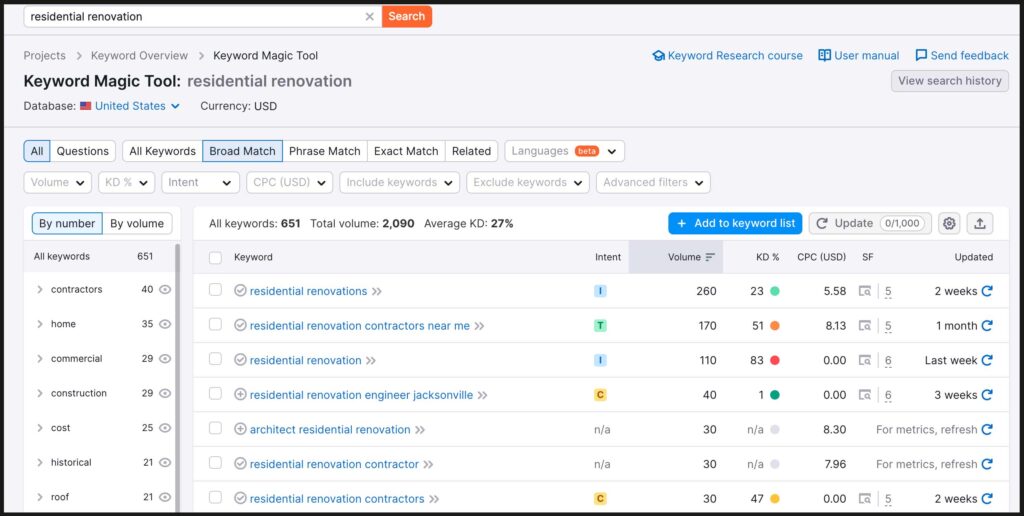
Understanding how potential clients search for construction services is critical to building an effective marketing strategy.
Residential vs. Commercial Behavior
- Residential clients: Primarily use search engines to find contractors
- Commercial clients: Rely more on relationships, but still research online before engaging
Using Keyword Research
Keyword research reveals:
- What services people search for
- How often they search
- Which services have the highest demand
For example:
- “Kitchen remodel” may have significantly higher search volume than “basement remodel”
- Certain commercial sectors (like data centers) may be growing rapidly
This data helps prioritize:
- Services to promote
- Markets to enter
- Marketing investments
Step 4: Develop a Construction Website Strategy

Your website is the foundation of your marketing system. For many prospects, it is the first meaningful interaction with your company.
An effective construction website should include:
- Clear service pages aligned with search intent
- Project portfolios and case studies
- Testimonials and trust signals
- Strong calls to action
Key Website Principles
- Structure should match how users search
- Content should clearly explain services
- Design should reflect the quality of your work
In most cases, rebuilding a website with proper strategy is more effective than trying to patch an outdated one.
Step 5: Implement SEO for Long-Term Lead Generation

Search engine optimization (SEO) is one of the most effective long-term strategies for construction lead generation.
Most prospects begin their search online, often comparing multiple contractors before reaching out.
Effective construction SEO includes:
- Optimizing service and location pages
- Publishing educational content targeting search queries
- Improving website speed and user experience
- Building local authority through citations and backlinks
Over time, these efforts compound. Instead of paying for every lead, your website becomes a consistent source of inbound opportunities.
Step 6: Use Paid Advertising for Immediate Leads
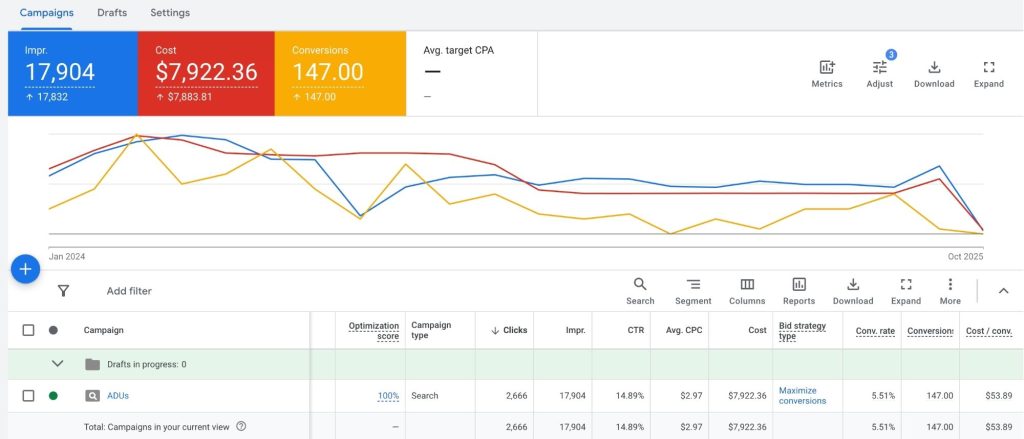
While SEO builds long-term momentum, paid advertising generates leads quickly.
Platforms like Google Ads allow contractors to appear at the top of search results for high-intent queries.
Common Paid Channels
- Google Search Ads (high intent)
- Local Service Ads (pay-per-lead, trust-driven)
- Meta Ads (awareness and retargeting)
Paid advertising is especially effective for residential contractors, where homeowners actively search for services.
When combined with a strong website and tracking system, it becomes a predictable lead generation channel.
Step 7: Build a Lead Tracking System
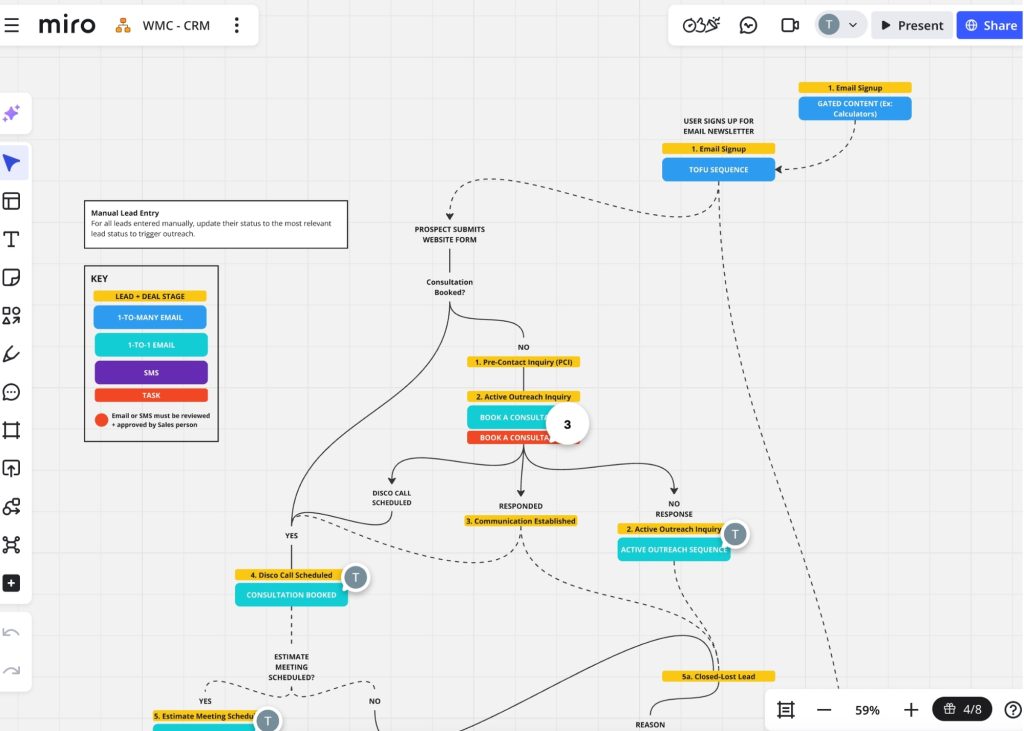
Generating leads is only part of the equation. Companies must also track, manage, and convert those leads effectively.
Key tools include:
- CRM systems for lead management
- Call tracking tools
- Analytics platforms
These systems help answer critical questions:
- Which channels generate the best leads?
- What is your conversion rate?
- Where are opportunities being lost?
Without tracking, it is impossible to optimize your marketing system.
Step 8: Set Performance Metrics
Marketing plans should include clear performance indicators tied to business outcomes.
Important metrics include:
- Lead volume
- Lead quality
- Conversion rate
- Revenue generated from marketing
While traffic and rankings are useful indicators, the ultimate goal is generating qualified opportunities and closed projects.
Over time, these metrics help refine your marketing strategy and improve ROI.
Conclusion
A construction marketing plan transforms marketing from a series of disconnected tactics into a structured growth system.
By defining business goals, identifying ideal clients, understanding market demand, and investing in both SEO and paid advertising, contractors can build a consistent pipeline of qualified opportunities.
Instead of relying solely on referrals, a well-executed marketing strategy gives companies control over their growth—and the ability to pursue the projects they actually want.
FAQs
What should be included in a construction marketing plan?
A construction marketing plan should include business goals, ICP, keyword research, website strategy, SEO, paid advertising, and lead tracking systems.
How do construction companies generate leads online?
Through SEO, Google Ads, local search visibility, and high-converting websites designed to capture inquiries.
What is the difference between B2B and B2C construction marketing?
B2C relies heavily on search and advertising, while B2B focuses more on relationships, reputation, and brand visibility.
How long does it take for construction marketing to work?
Paid advertising can generate leads quickly, while SEO typically takes 3–6+ months to build consistent traffic.
Do contractors need a marketing plan?
Yes. Without a plan, marketing becomes inconsistent and reactive, making it difficult to achieve predictable growth.
