
website development agency
Website design and development for architecture, engineering, construction, and manufacturing companies
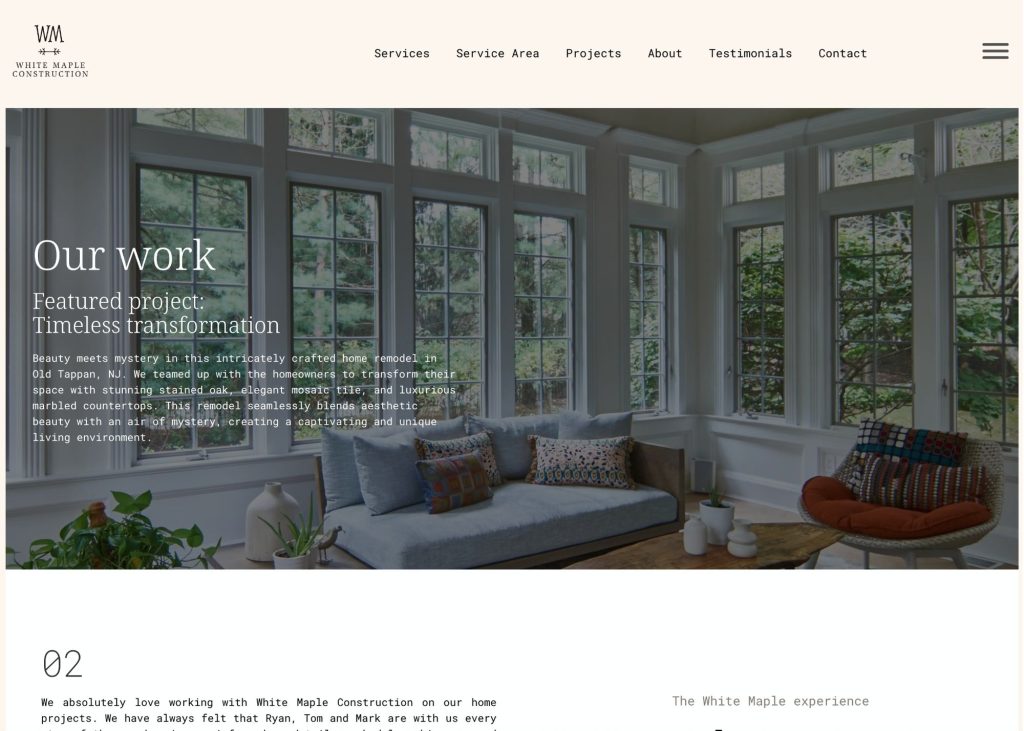
A website development agency plans, designs, builds, launches, and improves websites around business and user goals. That work can include strategy, UX, content, design, development, SEO, integrations, analytics, and conversion planning.
For architecture, engineering, construction, and manufacturing companies, a website has a bigger job than simply looking professional. Prospective clients use it to understand your capabilities, evaluate relevant experience, compare your company with competitors, and decide whether it makes sense to start a conversation.
We connect website strategy, messaging, user experience, search visibility, visual design, development, and conversion into one system. The result is a website built to help the right people find you, understand you, trust your expertise, and take an appropriate next step.
Ready to get started? Book a consultation now.
What do our website design and development services include?
Our website design and development services connect strategy, copy, design, development, SEO, and conversion planning from the beginning. We do not treat these as isolated tasks because decisions made in one area directly affect the others.
A beautiful site with unclear messaging will struggle. Strong copy buried inside poor navigation will struggle. SEO without the right site architecture creates unnecessary limitations. Strategy determines what needs to be built, and each step after that should support the same business goals.
website strategy and discovery
Website strategy defines what the site needs to accomplish before design or development begins.
We start by understanding your business, the work you want more of, the people you need to reach, and the role the website should play in your broader marketing and business development efforts.
That may include:
- business and growth goals
- ideal customer profile development
- priority services and capabilities
- target sectors and markets
- product or project priorities
- audience research
- competitor review
- existing website performance
- conversion goals
- search demand
An architecture firm pursuing larger commercial projects needs a different website strategy than a residential design-build company generating homeowner leads. A building product manufacturer selling through architects and specifiers needs a different structure than either.
Strategy gives the project a reason for every page, section, and decision that follows.
website architecture and ux planning
Website architecture determines how information is organized. UX, or user experience, determines how easily visitors can find and use that information.
For technical companies, both matter.
A civil engineering firm may need to organize multiple disciplines, markets, locations, project types, and career opportunities. A commercial general contractor may need clear paths based on markets served, project experience, geography, and delivery methods. A manufacturer may need visitors to move between products, applications, specifications, technical resources, and sales support without getting lost.
We plan:
- sitemaps and page hierarchy
- navigation
- audience journeys
- service, market, project, and product relationships
- content hierarchy
- mobile experiences
- conversion paths
Good UX should feel straightforward. Visitors should not have to understand your internal company structure to figure out where the information they need lives.
website design
Website design determines how your company communicates visually and how information is presented throughout the user experience.
For AEC and manufacturing companies, design should reinforce credibility without getting in the way of communication. Strong photography, project imagery, technical drawings, products, video, typography, layout, and visual hierarchy can help demonstrate the quality of your work while making complex information easier to understand.
Our website design work considers:
- visual direction
- brand consistency
- typography and hierarchy
- project photography
- product imagery
- layout systems
- mobile and responsive design
- reusable visual patterns
The goal is not design for design’s sake. The goal is a website that looks appropriate for the quality of the company behind it and helps visitors evaluate that company efficiently.
seo-focused website copywriting
Website copy should explain what you do in the language your prospects understand while supporting how they search.
We develop content around both business priorities and search intent. That can include homepage messaging, service pages, sector and market content, project and case study pages, product or category content, location pages, and other resources that help prospective clients evaluate your expertise.
Our copywriting process may address:
- positioning and core messaging
- service descriptions
- market and sector expertise
- project experience
- product information
- buyer questions
- keyword and search-intent alignment
- internal linking
- concise, answer-oriented content
Strong website copy makes it easier for the right prospects to recognize that they are in the right place. It also creates the foundation for ongoing SEO, AEO, content marketing, and lead generation.
search and ai visibility foundations
A website redesign is an opportunity to build search visibility into the structure of the site rather than trying to add SEO after everything else is finished.
We use keyword and audience research to inform site architecture, page purpose, content structure, on-page optimization, internal linking, and technical considerations.
Depending on the project, that may include:
- keyword-informed site architecture
- SEO-friendly URLs and page organization
- title and metadata planning
- heading structure
- internal linking
- technical SEO considerations
- redirect planning
- structured, answer-friendly copy
- schema opportunities
- content relationships that clarify expertise
Our SEO services can continue building organic visibility after launch, while our AEO services focus on helping content remain clear and interpretable as people increasingly use AI-powered tools to research companies and answer questions.
No agency can guarantee rankings or AI citations. What we can do is create a technically and structurally sound foundation that gives search engines and AI systems clearer information about your company, services, experience, and expertise.
website development
Website development turns approved strategy, content, and design into a functional website.
We build responsive websites that work across screen sizes and give teams a practical foundation they can maintain and expand as the business evolves.
Website development can include:
- responsive implementation
- content management system development
- reusable content components
- forms
- appropriate integrations
- performance considerations
- content population
- maintainability planning
The exact functionality depends on the company.
An architecture firm may need flexible project templates that allow teams to organize work by sector. A manufacturer may need product categories and technical-resource relationships. A growing contractor may need a structure that makes adding services, locations, projects, and team members straightforward.
We build around the real requirements instead of forcing every company into the same website formula.
conversion and lead generation integration
A website should give each relevant visitor a logical next step.
That does not mean covering every page in aggressive calls to action. For companies selling technical, high-value, or relationship-driven services, the appropriate conversion may vary depending on where someone is in the buying process.
We consider:
- calls to action
- contact and inquiry pathways
- qualifying forms
- landing-page alignment
- CRM handoffs when required
- analytics and conversion tracking
- next steps for different visitor types
A homeowner ready to discuss a design-build project may be comfortable requesting a consultation immediately. A developer evaluating an engineering firm for a future pursuit may spend more time reviewing project experience and technical expertise first.
Conversion strategy should reflect how your audience actually makes decisions.
quality assurance, launch, and ongoing
Launch is the point where the website starts producing real-world data.
Before that happens, we review the site across devices, check content and functionality, plan SEO migrations and redirects where needed, and verify that measurement systems are in place.
That may include:
- responsive and device testing
- form and functionality checks
- content review
- redirect implementation
- SEO migration checks
- analytics verification
- conversion tracking
- post-launch testing
After launch, the website can become part of a broader marketing system rather than a finished asset that sits untouched for years.
SEO, AEO, lead generation services, content, paid campaigns, recruiting initiatives, and new business priorities can all create reasons to continue improving the site over time.
Why website development matters in AEC and manufacturing

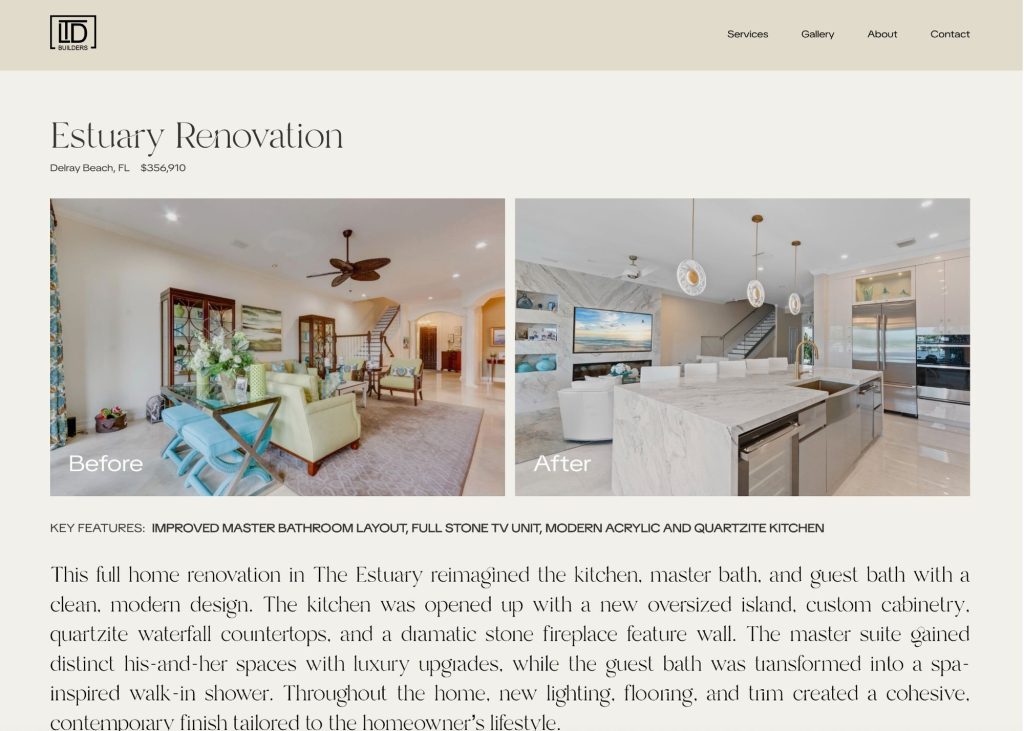
Website development matters in AEC and manufacturing because buyers use websites to validate expertise before making high-value, often long-term decisions. A strong website organizes technical information clearly, demonstrates relevant experience, reinforces credibility, and connects marketing activity to the business development process.
Buyers use your website to validate your expertise
Referrals remain important in architecture, engineering, construction, and manufacturing. But a referral rarely eliminates the research process.
Someone who hears your company name through a trusted contact may still search for you, review your projects, evaluate your services, look at your team, and compare you with another option.
The same thing happens during procurement, shortlist development, proposal preparation, specification, recruiting, and sales conversations.
Your website often becomes the place where an initial recommendation is either reinforced or weakened.
It should make relevant experience easy to find and give visitors confidence that your company understands work like theirs.
Complex services and products need clear information architecture
Technical companies frequently have more complicated offerings than their websites suggest.
Engineering firms may work across multiple disciplines and sectors. Contractors may have different commercial and residential divisions. Building product companies may serve architects, contractors, distributors, owners, and installers, each looking for different information.
Trying to force these audiences through generic navigation creates friction.
Clear information architecture helps visitors answer practical questions quickly:
Do you provide the service I need? Have you worked on projects like mine? Do you serve my market? Does this product work for my application? Where can I find technical information? Who should I contact?
When those answers are difficult to find, buyers have another easy option: leave.
Your website should support marketing and business development
Your website sits at the center of most digital marketing activity.
SEO drives people to it. Paid campaigns send prospects to landing pages. Social media and email link back to projects and resources. Referral prospects use it for validation. Business development teams send people to relevant service or project content. Candidates use it to decide whether they want to work for you.
A stronger website makes each of those channels more useful.
That is why we approach website development as part of a broader AEC marketing system. We understand how positioning, branding, SEO, AEO, lead generation, content, recruiting, and business development connect because we work across those disciplines every day.
Who we help
We provide website design and development services for companies throughout the built environment, with a focus on organizations that need to communicate technical expertise clearly and support long-term growth.
Architecture firms
Architecture websites need to balance strong visual presentation with enough substance to help prospective clients understand the firm behind the portfolio.
Our architecture website design work helps firms organize projects, services, sectors, capabilities, design perspectives, and team expertise while preserving the visual experience that matters in an image-driven profession.
The goal is not simply to create an attractive project gallery. It is to give owners, developers, institutions, homeowners, and other prospective clients enough information to understand whether the firm is the right fit.
Engineering firms
Engineering websites often have to organize large amounts of technical information for very different audiences.
Our engineering website design approach focuses on making disciplines, markets, project experience, locations, expertise, and careers easier to navigate.
For civil engineering firms, infrastructure consultants, and specialty engineering providers, credibility frequently comes from specificity. Prospective clients should be able to understand the problems you solve and see evidence of relevant experience without working through vague marketing language.
Recruiting matters, too. For one civil engineering client, a website redesign became part of a broader marketing strategy built around both established expertise and the firm’s distinctive workplace culture. That digital foundation later supported ongoing SEO, content, PR, and recruiting efforts.
Construction companies
Construction websites need to establish trust while making project fit clear.
Our construction website design work can support custom home builders, design-build remodelers, commercial general contractors, specialty contractors, and other construction businesses with clear service organization, project galleries, market information, service-area content, trust signals, and inquiry pathways.
A strong construction website can also help a company reposition itself as the business evolves.
We have worked with a remodeling company moving from residential into commercial work where the website experience was deliberately segmented so commercial prospects could evaluate relevant capabilities without being immediately defined by the company’s residential portfolio. The website became part of a broader strategy that supported both established revenue and expansion into a new market.
Manufacturers & building product companies
Manufacturing websites often need to serve multiple audiences at once.
Architects may need specifications. Contractors may want installation information. Developers and owners may be researching applications. Distributors or sales representatives may need product materials. Different visitors may enter the site with very different levels of technical knowledge.
Our manufacturing web design approach focuses on product findability, clear applications, technical information, sales enablement, and pathways for users such as specifiers, contractors, developers, distributors, and other decision-makers.
The website should make technical products easier to understand, evaluate, and specify.
Signs your company needs website development support
A website redesign makes sense when the existing site is no longer supporting the company’s current positioning, audiences, capabilities, or growth goals. The problem may be visual, but more often it involves the underlying strategy, content, structure, search visibility, or ability to convert interest into action.
01
/ Your website no longer represents the company you are today
Companies change faster than websites do.
You may have expanded into new markets, added capabilities, hired a stronger team, completed larger projects, entered new geographies, improved your brand, or changed the type of work you want to pursue.
If the website still describes the company you were five years ago, prospects are evaluating outdated information.
Website strategy should reflect where the business is going, not only where it has been.
02
/ Prospects cannot quickly understand what you do
Technical expertise is not an excuse for confusing communication.
If important services are buried, navigation reflects your internal organization rather than buyer needs, or the homepage relies on vague statements that could describe any competitor, visitors have to work too hard to determine whether you are relevant.
Clear messaging does not oversimplify expertise. It organizes it.
The right prospect should be able to understand your primary capabilities, markets, experience, and differentiation without decoding industry jargon or searching through half the site.
03
/ Your website looks good but does not support growth
Attractive websites can still underperform.
A site may have great photography and polished design while offering minimal service content, weak search visibility, unclear calls to action, thin project information, or no connection to lead generation.
That becomes particularly limiting when you begin investing in SEO, paid advertising, content, social media, or other growth initiatives.
Marketing can drive attention to the website. The website still has to do something useful with that attention.
04
/ Your team struggles to update or expand the website
Your website should be able to grow with the business.
If adding a project requires rebuilding layouts, new services do not fit the navigation, product information is difficult to manage, or your team avoids publishing because the process is too cumbersome, the technical foundation may be holding you back.
Scalability matters because websites change.
New services, employees, sectors, offices, projects, products, case studies, and resources should be additions to an established system, not reasons to rethink the entire site every time the company evolves.
Nover’s website design and development process


Our website design and development process starts with business strategy, not visual concepts. We research the audience and opportunity, plan the site architecture, develop messaging and design, build and test the website, then use post-launch data and broader marketing priorities to guide future improvements.
We start with research and strategy
Before deciding what the site should look like, we establish what it needs to accomplish.
We review business goals, target audiences, ideal customer profiles, priority services or products, search demand, competitors, existing website performance, and the broader marketing strategy.
This stage helps answer a basic question: What should we build, and why?
It also helps us prioritize. Not every possible audience, page, feature, or idea deserves equal weight.
We build the site architecture and content strategy
Once the priorities are clear, we map the website.
We determine the sitemap, navigation, page relationships, keyword opportunities, content requirements, and conversion paths.
Each important page should have a purpose.
A service page may need to capture search demand and explain a capability. A project page may need to prove relevant experience. A market page may connect several capabilities for one audience. A product page may need technical information that helps a specifier make a decision.
Planning these relationships early creates a stronger experience for visitors and a stronger foundation for search.
We develop the messaging and visual system
With the structure established, we develop the words and visual framework that bring it together.
That includes positioning, page copy, content hierarchy, design direction, layouts, project or product presentation, and reusable components.
Copy and design inform each other throughout this stage.
The goal is a cohesive website in which the visual system reinforces the message and the message gives the design substance.
We develop, test, and launch
We build the website, populate approved content, test functionality, review responsive behavior, and prepare the site for launch.
For redesigns, we also pay close attention to migration issues that can affect search performance, including URLs, redirects, metadata, internal links, and analytics.
Launch should not mean throwing away the value the existing website has already accumulated.
It should move the company onto a stronger foundation.
We measure and improve
A website begins producing better information once real people start using it.
After launch, analytics can show which pages visitors enter through, what content attracts organic traffic, which calls to action generate engagement, how marketing channels convert, and where additional opportunities exist.
We use that information alongside your business priorities.
Sometimes the next step is SEO content. Sometimes it is a new landing page, an additional market section, a conversion test, a new case study, or support for an entirely new service line.
The website becomes part of an evolving marketing system rather than a project that disappears from the priority list after launch.
Frequently asked questions about our website development services
What does a website development agency do?
A website development agency plans, designs, builds, launches, and improves websites around business and user goals.
Services can include website strategy, UX and information architecture, copywriting, visual design, development, SEO, integrations, analytics, testing, and conversion planning.
The right scope depends on what the website needs to accomplish. For AEC and manufacturing companies, that often means organizing technical information, demonstrating relevant experience, supporting search visibility, and making the next step clear for prospective clients.
What is the difference between website design and website development?
Website design determines how a website communicates, looks, and guides users. Website development turns those designs and functional requirements into a working website.
Strong projects connect both disciplines from the beginning.
Design decisions affect development. Development requirements affect UX. Content affects layout. SEO affects architecture. Treating each discipline separately can create avoidable compromises later in the project.
We connect website design and development so the final system works as a whole.
Does Nover include SEO in website development?
Yes. We incorporate SEO considerations into website strategy, architecture, copy, on-page elements, internal linking, technical planning, and migration work where applicable.
That gives the website a stronger search foundation at launch.
A website build alone does not guarantee rankings. Competitive organic visibility usually requires ongoing SEO work, including content development, technical improvements, authority building, and continued optimization.
Our SEO services can continue that work after the new site launches.
How long does a website redesign take?
Website redesign timelines depend on the scope of the project.
The number of pages, amount of new content, review and approval process, required functionality, integrations, project or product data, and migration requirements can all affect timing.
We define the project requirements before setting expectations rather than applying the same timeline to every company.
A straightforward marketing site and a manufacturer website with complex product relationships should not be treated as the same development project.
Can Nover support a website after it launches?
Yes. For many clients, the website is the foundation for an ongoing marketing engagement rather than the end of one.
After launch, we can support initiatives such as SEO, AEO, content production, lead generation, paid campaigns, analytics, conversion improvements, new service or market pages, and broader AEC marketing services.
That flexibility matters because your priorities will change.
The website should be able to change with them.
Build a website that supports your growth
A strong website should make your company easier to find, easier to understand, and easier to trust.
It should clearly communicate what you do, organize technical information around the people who need it, demonstrate the experience behind your claims, and create sensible pathways from research to conversation.
And it should be built with the rest of your marketing in mind.
We bring website strategy, messaging, design, development, SEO, AEO, lead generation, and AEC industry experience together so the website can support both the company you are today and the growth you are working toward.