
social media management services
for architecture, engineering, construction, and manufacturing companies
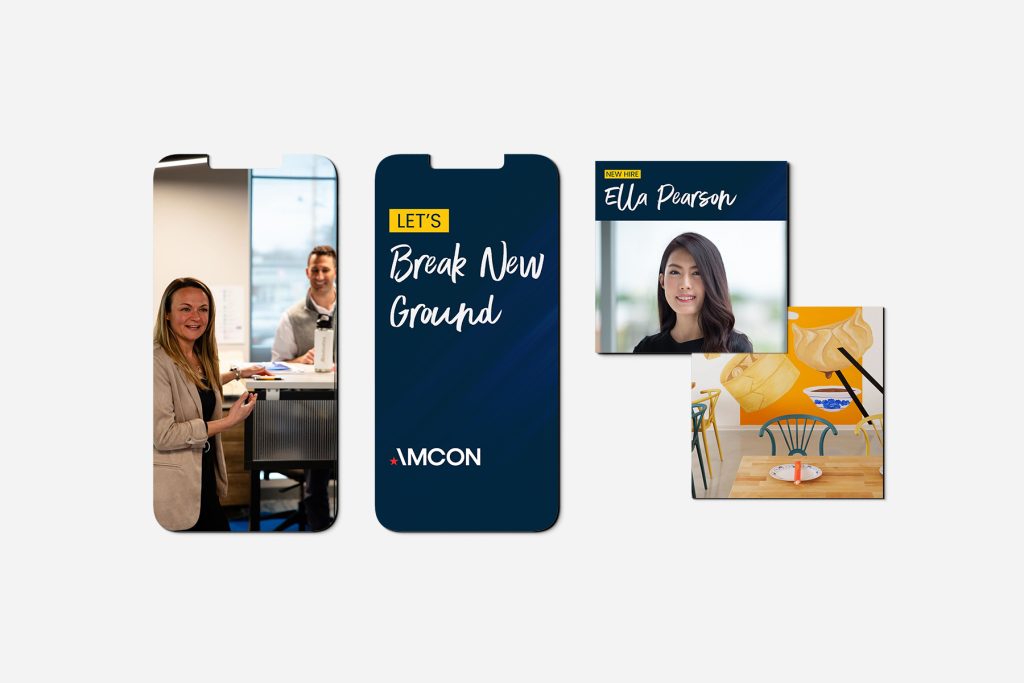
Social media management is the ongoing process of planning, creating, publishing, monitoring, and improving a company’s social content. It typically includes strategy, content calendars, copywriting, graphics or video, audience engagement, approvals, reporting, and optimization.
For architecture, engineering, construction, and manufacturing companies, effective social media management looks different from consumer brands chasing viral reach. Projects are complex. Expertise matters. Sales cycles can last months or years. Relationships influence decisions. The value of social often comes from repeatedly showing the right people your work, expertise, people, and point of view until your company becomes familiar and credible.
We build AEC social media management strategies around those realities. We turn projects, technical knowledge, company activity, and internal expertise into consistent content tied to business priorities, then manage the system from planning and asset gathering through publishing, engagement, paid amplification, and measurement.
Ready to get started? Book a consultation now.
What do our social media management services include?
Good social media rarely comes from isolated posts.
Strategy, positioning, internal expertise, photography, video, design, publishing, engagement, and reporting all need to work together. Our social media management services create a repeatable system for turning what is already happening inside your company into content the right audiences have a reason to notice.
social media strategy
Before we decide what to post, we decide what social media needs to accomplish.
Some companies simply need credible, active profiles so prospects and recruits see a current business when they vet the company. Others are prepared to invest in executive thought leadership, educational video, frequent project coverage, paid campaigns, or a larger brand-building strategy.
Those are very different levels of commitment.
We define the commitment before defining the posting calendar.
Our strategy may address:
- business and marketing goals
- ideal audiences
- platform selection
- competitive activity
- organic versus paid social
- content pillars
- publishing expectations
- internal subject matter experts
- photography and video resources
- approval capacity
- measurement
We do not recommend being everywhere simply because a platform exists. Channel selection depends on who you need to reach, how they use social media, what your company can realistically produce, and what role social should play in the broader marketing system.
content planning and editorial calendars
Consistency is easier when you are not starting from a blank document every week.
We develop recurring content pillars and editorial calendars that give your social presence structure while leaving room for timely opportunities.
Depending on the company, a calendar may include:
- project announcements and milestones
- completed-project retrospectives
- technical or educational content
- company news
- employee and leadership features
- recruiting content
- awards and recognition
- industry events
- client and partner recognition
- thought leadership
- seasonal topics
- campaign content
The calendar provides direction, not rigidity. A project milestone, new hire, breaking industry development, or strong jobsite photo may deserve attention even if it was not scheduled a month earlier.
social media content creation
AEC companies usually have no shortage of things worth talking about. The challenge is turning them into content people can quickly understand.
We create social content that communicates expertise without stripping away the technical substance that makes the expertise valuable.
Depending on your strategy, that can include:
- copywriting
- branded graphics
- carousels
- short-form video
- project photography
- educational posts
- subject matter expert content
- testimonials
- project stories
- before-and-after content
- employee features
- recruiting and culture content
A civil engineer may explain why a particular stormwater approach was selected. A manufacturer might break down how a product performs in a specific application. A contractor might show an unusual installation condition from the field.
The goal is not to make technical companies sound like consumer influencers. It is to make useful expertise accessible enough that clients, partners, recruits, and prospects understand why it matters.
asset gathering and expertise extraction
One of the biggest reasons AEC social programs stall is simple: the marketing team is constantly asking busy people, “What should we post?”
That is not a sustainable system.
We establish ways to gather ideas, knowledge, photography, video, and project information without requiring your team to invent a new social strategy every month.
That may include:
- structured interviews with subject matter experts
- conversations with principals and technical staff
- shared photo and video libraries
- jobsite and project-content capture
- recurring requests tied to project milestones
- repurposing presentations and webinars
- mining case studies and project sheets
- reviewing proposals and qualification materials
- turning existing website content into social formats
Much of the best social content is already inside your company. It lives in the conversations your experts have with clients, the problems teams solve on projects, the photos sitting on employees’ phones, and the explanations that happen every day.
Our job is to build a practical way to extract it.
scheduling, publishing, and approvals
Creating content is only part of the work. It still needs to get reviewed, formatted correctly, scheduled, and published.
We establish an approval workflow that gives your team appropriate oversight without turning every post into a two-week process.
Our social media management may include:
- editorial calendar management
- content review and approvals
- platform-specific formatting
- scheduling and publishing
- link and tag verification
- quality control
- brand consistency
- channel-specific adaptation
We also avoid blindly publishing identical content everywhere.
A technical LinkedIn post for developers, engineers, or industry partners may need a different format than an Instagram post built around project photography. The core idea can stay consistent while the execution reflects why people use each platform.
community and relationship management
For relationship-driven businesses, engagement is not simply a tactic for convincing an algorithm to show a post to more people.
It is a way to stay connected to the people who already matter to the business.
We can help manage:
- comments
- company mentions
- project-team recognition
- partner tagging
- employee engagement
- relevant industry conversations
- direct messages when appropriate
If an architect posts a completed project, recognizing the contractor, engineer, photographer, and other collaborators can strengthen relationships while extending visibility into relevant professional networks.
Those interactions may never show up as a clean “social media lead.” That does not make them insignificant. In AEC, relationships often influence who gets remembered, referred, shortlisted, or called months later.
paid social media campaigns
Organic social media and paid social media perform different jobs.
Organic content primarily builds visibility, familiarity, credibility, and relationships over time. Paid campaigns allow us to intentionally put content or offers in front of defined audiences.
Paid social may support:
- brand awareness
- retargeting
- recruiting
- event promotion
- content amplification
- geographic targeting
- professional or industry targeting
- lead-generation campaigns
Whether paid social makes sense depends heavily on the company and the offer.
A residential design-build firm promoting a service to homeowners may have a stronger direct-response opportunity on Meta than a specialized B2B engineering consultant pursuing a small universe of municipal buyers. In the second case, targeted LinkedIn awareness or retargeting may support a broader business-development strategy without becoming the primary lead source.
When social is expected to produce direct inquiries, we connect the campaign to our paid advertising services and lead generation services so targeting, landing pages, conversion tracking, and lead quality can be evaluated together.
reporting and optimization
Followers and likes can be useful indicators, but they are not a complete definition of social media success.
We report on metrics that help us understand whether social is reaching relevant people and contributing to broader business goals.
Depending on the strategy, we may evaluate:
- relevant audience reach
- impressions
- engagement quality
- profile visits
- website traffic
- partner and client engagement
- shares and mentions
- recruiting activity
- assisted inquiries and conversions
- paid campaign conversions
- business-development feedback
Then we use that information to make decisions.
What should we do more of? What should we stop doing? What deserves another test?
For Oaks Brothers Inc., a consistent, industry-focused content strategy helped LinkedIn impressions reach 16,933, a 169,230% year-over-year increase, while generating 2,586 organic LinkedIn interactions. The more important result was a stronger digital presence the company could use in sales conversations with general contractors who were unfamiliar with the business.
That is the distinction we care about: measurement should help us understand business value, not simply create a report full of bigger numbers.
Why AEC social media management matters in technical and trust-driven industries
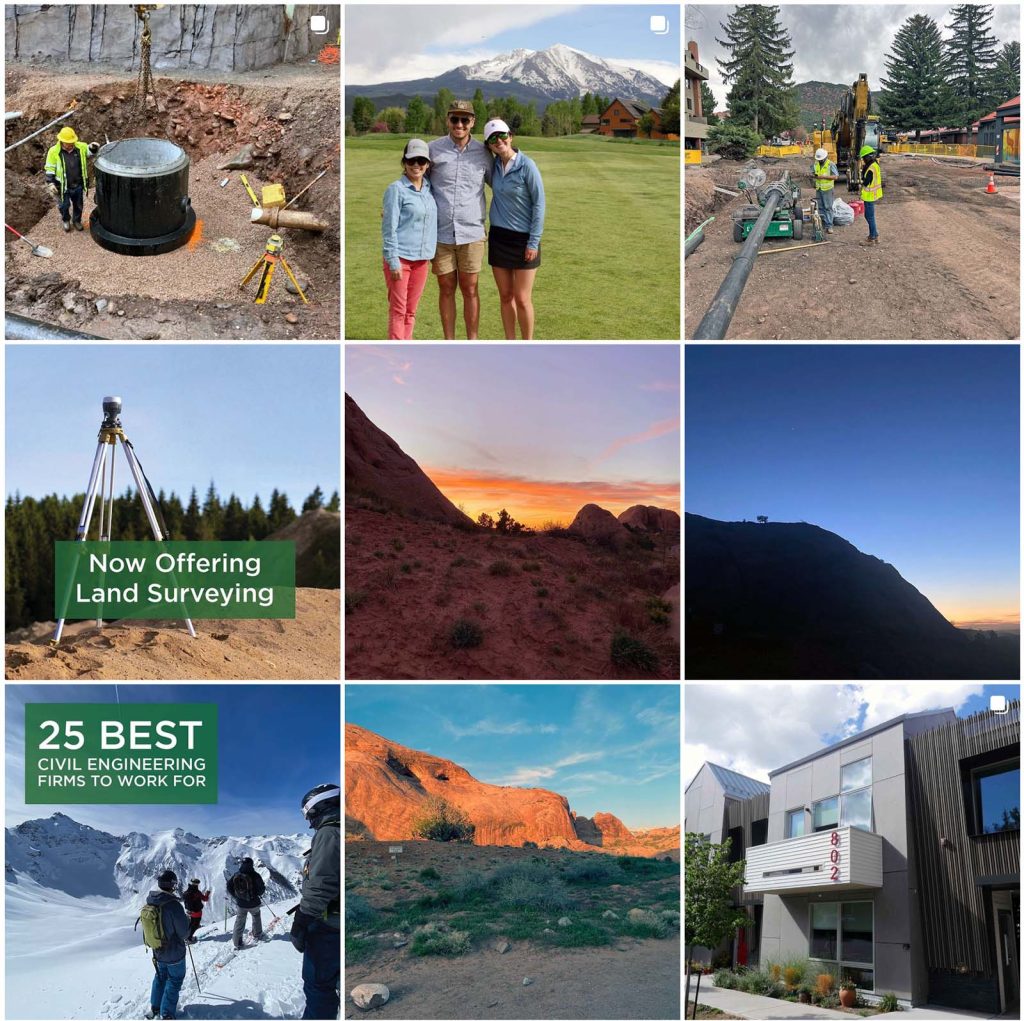
Social media reinforces credibility before the first conversation
People research companies before they contact them.
A prospective employee may look at LinkedIn before applying. A developer who receives your name from a referral partner may search for the company. A general contractor may review your project history. A homeowner may move from your website to Instagram to see whether your portfolio is current.
An inactive or generic social profile can make an otherwise established company look less active than it actually is.
A strong social presence helps close that credibility gap.
That does not mean every firm needs to publish five times per week or build a CEO into an online personality. For some companies, maintaining a professional baseline is enough. For others, social can become a much larger brand-building channel.
The appropriate investment depends on the business.
One project can create dozens of useful touchpoints
AEC companies invest enormous amounts of time in completing work, yet many market a project only once.
A single project could produce:
- a project announcement
- an early progress photo
- a technical explainer
- a team spotlight
- a partner-recognition post
- a material or product feature
- a before-and-after comparison
- a case study
- lessons learned
- a video walkthrough
- a client quote
- a project retrospective
That does not mean stretching thin information into repetitive posts.
It means recognizing that one project contains multiple stories for different audiences. A project manager sees technical challenges. A prospective employee sees the people behind the work. A future client sees experience with a relevant project type. A project partner sees a relationship worth recognizing.
Good content planning gets more value from the work your company is already doing.
For additional examples, explore our construction company social media content ideas.
Social media supports business development and recruiting
AEC sales are often relationship-driven.
Social media helps your company remain familiar between direct conversations with:
- current clients
- former clients
- referral partners
- developers and owners
- architects and engineers
- contractors and subcontractors
- distributors and specifiers
- prospective buyers
- potential employees
Someone seeing a useful post does not necessarily become a lead that afternoon.
But repeated visibility can make your company easier to remember when an opportunity arises. It can reinforce expertise after an introduction, give a salesperson relevant content to share, or help a candidate understand the people and projects behind a job posting.
For many B2B firms, that assisted role is more realistic and valuable than expecting social to function as the primary source of direct-response leads.
Who we help
We provide AEC social media marketing for companies whose work requires more context than a generic social media management agency typically provides.
Architecture firms
Architecture gives social media an obvious visual advantage, but beautiful project photography alone does not explain why a client should hire a particular firm.
We help architecture practices combine strong visuals with design thinking, project context, principal expertise, process, culture, and perspective.
Our social media management for architecture firms is built to show both what the work looks like and the thinking behind it.
Engineering firms
Engineering social media requires translating technical knowledge without oversimplifying it.
We help engineering firms share project experience, explain specialized capabilities, highlight technical experts, support recruiting, and remain visible with clients and industry partners.
LinkedIn is often an important channel for B2B engineering firms, but platform selection still depends on the audience and strategy.
Read more about how engineers use social media or explore our social media marketing for engineering firms.
Construction companies
Construction companies have access to some of the strongest raw social content in the AEC industry: active jobsites, transformations, tools, techniques, project milestones, finished work, and field expertise.
We help companies turn those assets into a consistent system.
The strategy also changes significantly between B2B and B2C contractors. A commercial general contractor building relationships with owners, architects, and subcontractors may prioritize LinkedIn and project credibility. A residential remodeler may get more value from visual content on Instagram and Facebook, with paid social playing a larger role when the offer and market support it.
Our social media marketing for construction companies reflects that difference.
Manufacturers & building product companies
Manufacturers often need to communicate with several audiences at once: architects, engineers, specifiers, contractors, distributors, sales representatives, and end users.
Social content can help explain technical products, demonstrate applications, share installation information, support sales teams, recognize partners, document projects, and reinforce recruiting.
Our social media management for manufacturing companies turns product knowledge and technical expertise into content appropriate for the people involved in specifying, purchasing, installing, or selling the product.
Signs your company needs social media management support
01
/ your team posts inconsistently or only when something happens
Having social accounts is not the same as having a social media system.
If publishing depends on someone remembering to post after a project milestone, new hire, company event, or award, long gaps are almost inevitable.
A practical strategy creates recurring themes, clear responsibilities, an asset-gathering process, and a calendar your company can realistically support.
02
/ your channels show what you do but not why clients should trust you
A feed full of project photos can still fail to communicate expertise.
The audience may see finished buildings, products, or infrastructure without learning anything about the challenge, your role, the technical decisions involved, the people behind the work, or why the project demonstrates an important capability.
Strong social content adds context.
It helps someone understand not only what you completed, but what you know.
03
/ you have plenty of expertise and project assets but no system for using them
This is one of the most common problems we see.
Your principals have opinions. Your engineers know how to answer difficult technical questions. Your project managers have hundreds of photos. Your proposals contain detailed project stories. Your sales team hears the same customer questions repeatedly.
The raw material exists.
What is missing is the system for gathering, organizing, repurposing, approving, and publishing it.
We build that system so content production does not require your internal team to continually start over.
04
/ you are measuring activity instead of business value
A large following is not especially useful if it is made up of people who have little relationship to your market.
Social measurement should reflect the purpose of the strategy.
Are project partners engaging? Are the right professionals seeing the content? Are profile visits increasing? Is social sending relevant traffic to the website? Are employees sharing company posts? Are recruits mentioning the content? Does the business-development team hear prospects reference what they have seen online?
The answers tell us more than follower growth in isolation.
Nover’s AEC social media management process


We start with your goals, audience, and channel priorities
Strategy comes first.
We look at what the business is trying to accomplish, who needs to see the company, how those audiences use social media, and what role social should play alongside the rest of your marketing.
Then we recommend the appropriate level of investment.
We develop content pillars and a practical plan
We establish repeatable themes that connect your company’s expertise and activity to the interests of your audience.
The plan needs to be ambitious enough to create value but practical enough to sustain with the resources available.
We gather expertise and assets
Next, we establish an efficient flow of information.
That may involve expert interviews, shared photo folders, jobsite content, professional photography or video, project updates, existing presentations, case studies, proposals, or regular conversations with your team.
You should not have to invent content ideas for your agency every month.
We create, approve, and publish content
Our team turns the source material into polished social content, manages approvals, adapts content to the appropriate channels, and handles publishing.
Our branding and identity services can also help ensure the visual system behind that content is consistent with how you want the company to be perceived.
We measure what resonates and refine the strategy
Social media is not set-and-forget.
We review what audiences respond to, which topics create meaningful interaction, what content drives website or profile activity, and what the team is hearing from clients, recruits, and business-development conversations.
Then we refine the plan around what the evidence tells us.
Frequently asked questions about social media management
What does a social media marketing agency do?
A social media marketing agency develops and manages a company’s social strategy on its behalf. The work can include audience research, platform selection, content planning, copywriting, graphics and video, publishing, community management, paid campaigns, reporting, and ongoing optimization.
For AEC companies, the agency should also understand how technical expertise, project experience, long sales cycles, recruiting, and relationship-based business development affect the strategy.
What is included in social media management?
Social media management typically includes strategy, content calendars, content creation, approvals, scheduling, publishing, engagement, reporting, and optimization.
Our work can also include expertise extraction, project-asset gathering, photography and video coordination, paid social campaigns, and integration with broader branding or lead-generation initiatives.
Which social media platforms are best for AEC companies?
The best platforms depend on your audience, goals, business model, and available content resources.
LinkedIn is often important for B2B architecture, engineering, construction, and manufacturing companies because clients, partners, technical professionals, and recruits use it professionally. Instagram can be valuable for highly visual architecture, construction, and design work. Facebook and Instagram may play a larger role for consumer-facing construction companies. Other platforms can make sense when the audience and available video or subject matter expertise support them.
We would rather see a company manage the right channels well than maintain every available platform poorly.
How often should an AEC company post on social media?
There is no universal posting frequency for AEC companies.
The right cadence depends on your objectives, platforms, available expertise, photography and video, and the level of investment your company is prepared to maintain.
A company focused on maintaining credibility may need a relatively modest publishing schedule. A firm actively building executive thought leadership or a larger consumer brand may publish much more frequently.
Consistency and content quality matter more than forcing an arbitrary number of posts.
How do you measure social media marketing success?
We measure social media marketing based on the purpose of the strategy rather than relying on followers and likes alone.
Useful measurements can include relevant audience reach, impressions, engagement quality, profile visits, website traffic, partner and client interactions, mentions, shares, recruiting activity, assisted conversions, business-development feedback, and paid campaign conversions.
The goal is to understand whether social media is helping the company become more visible, credible, familiar, and effective with the audiences that matter.
Can social media generate leads for AEC companies?
Yes, social media can generate leads for AEC companies, but it should not automatically be treated as the primary direct-response channel.
For some B2C construction companies or well-targeted paid campaigns, social can directly generate inquiries. For many B2B architecture, engineering, commercial construction, and manufacturing firms, its larger contribution comes through awareness, credibility, relationships, recruiting, assisted conversions, and sales support.
The right expectation depends on your audience and sales model.
Do you create the photos, videos, and graphics?
Yes. We can create branded graphics and video content and help establish an ongoing process for gathering photography and video.
Depending on the strategy, we may work with existing project assets, coordinate professional photography or videography, establish shared libraries for your team, or help employees capture useful material from the field.
The goal is to make asset gathering repeatable rather than turning every month into a request for new content.
Do you manage paid social media campaigns?
Yes.
We manage paid social campaigns when they support the broader marketing strategy. That can include awareness, retargeting, recruiting, event promotion, content amplification, or direct lead-generation campaigns.
We evaluate paid social separately from organic management because the objectives, targeting, budget, creative requirements, and conversion measurement are different.
Get a social media management consultation
Social media should reinforce the company you are trying to become, not become another marketing task your team struggles to keep up with.
The right strategy may be a focused baseline presence that keeps your company current and credible. It may be a larger content program built around technical experts and project stories. It may include paid amplification, recruiting, executive thought leadership, or integration with a broader lead-generation strategy.
We help determine what level of investment makes sense first.
Then we build the system, manage the work, measure what matters, and improve it over time.
If you are looking for an AEC social media management agency that understands architecture, engineering, construction, and building-product companies, schedule a social media consultation with us.